The Estate
Our Terroir
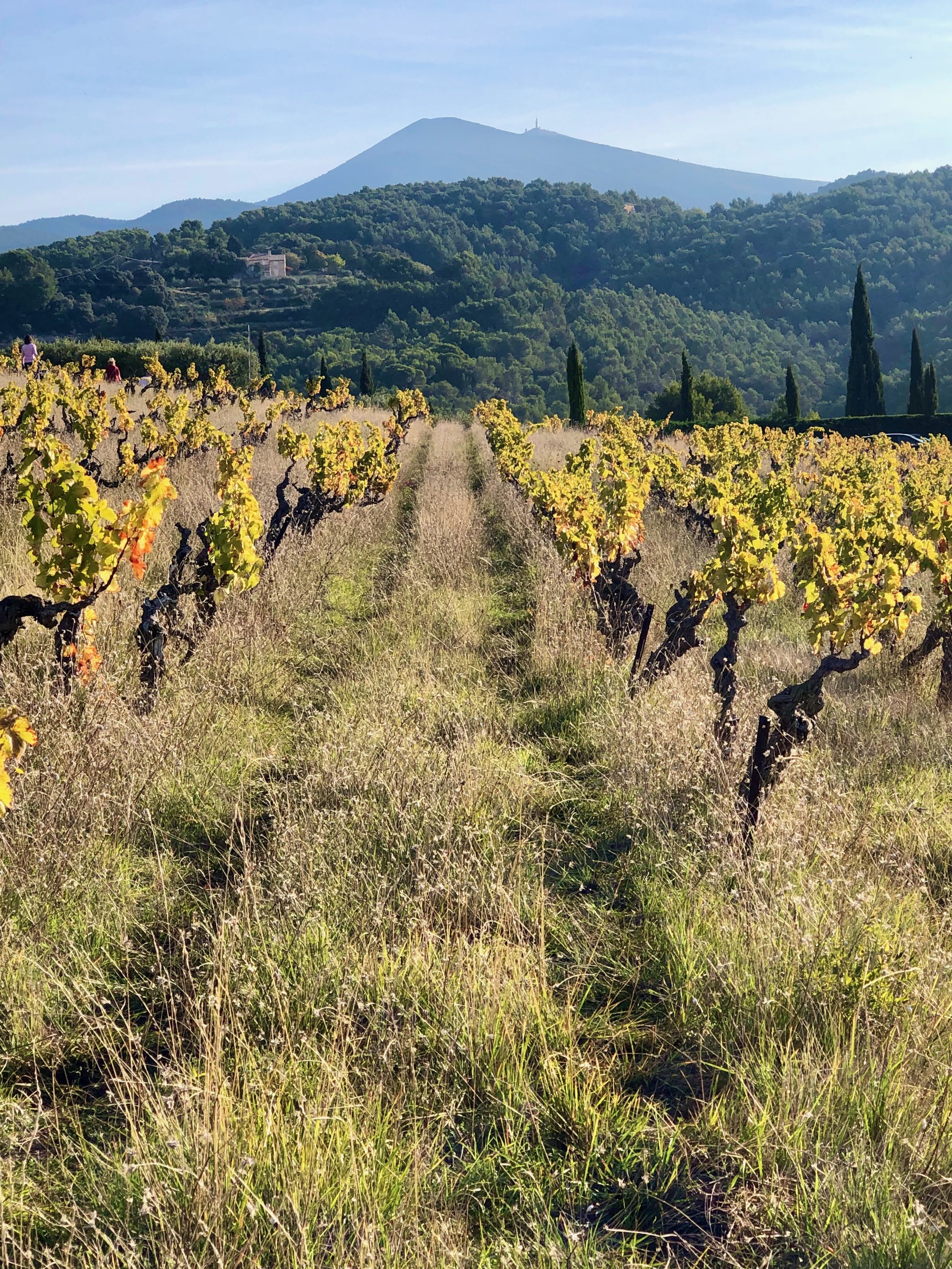
The soils at Clos de Trias are Triassic in origin — dating from between 200 and 250 million years ago, among the oldest geological formations found under any vineyard in the southern Rhône. Typically found deep below the surface, they are composed of ancient seabed sediments — limestone, sandstone, marl and clay — compressed over hundreds of millions of years into some of the most mineral-rich and complex soils on earth.
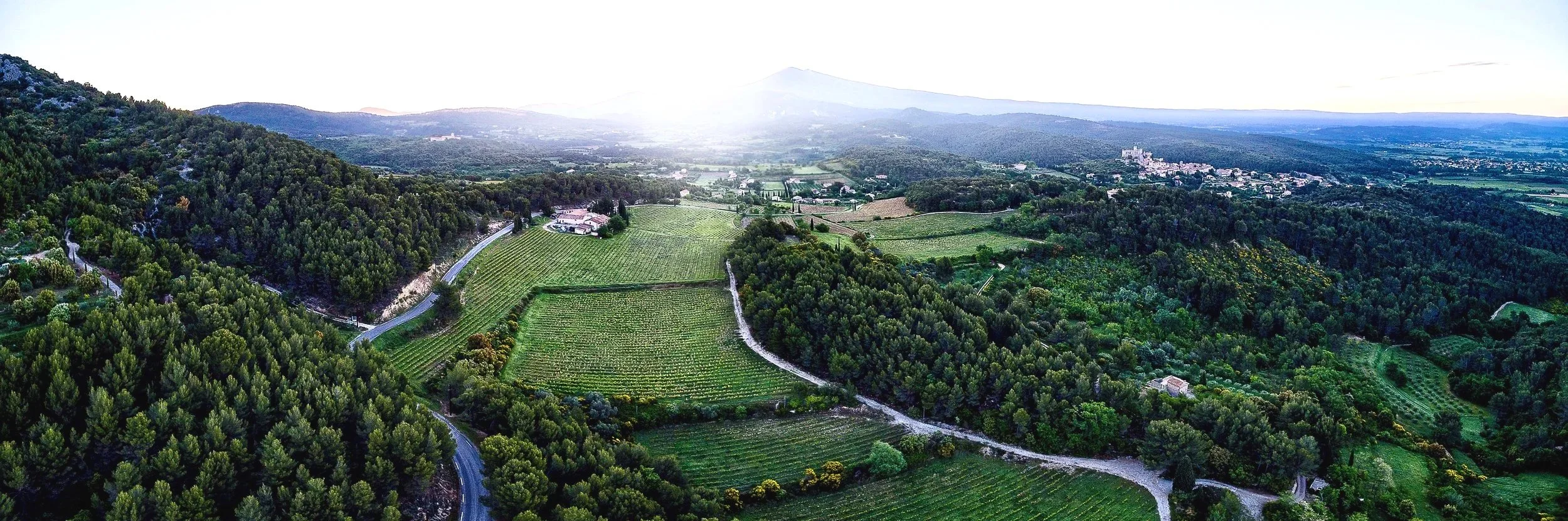
Here they have been pushed up and exposed by the jagged Dentelles de Montmirail, creating natural folds in the landscape, a rare occurrence that was not lost on Even during his three year search. What they deliver into the glass is unmistakable — a mineral depth and a natural structure that is impossible to replicate anywhere else.
The vineyards sit at between 350 and 500 meters elevation (1,150 to 1,640 feet), where dramatic swings between daytime and nighttime temperatures slow the ripening process, preserving the brightness and vitality that make these wines particularly alive and food friendly.
Our location
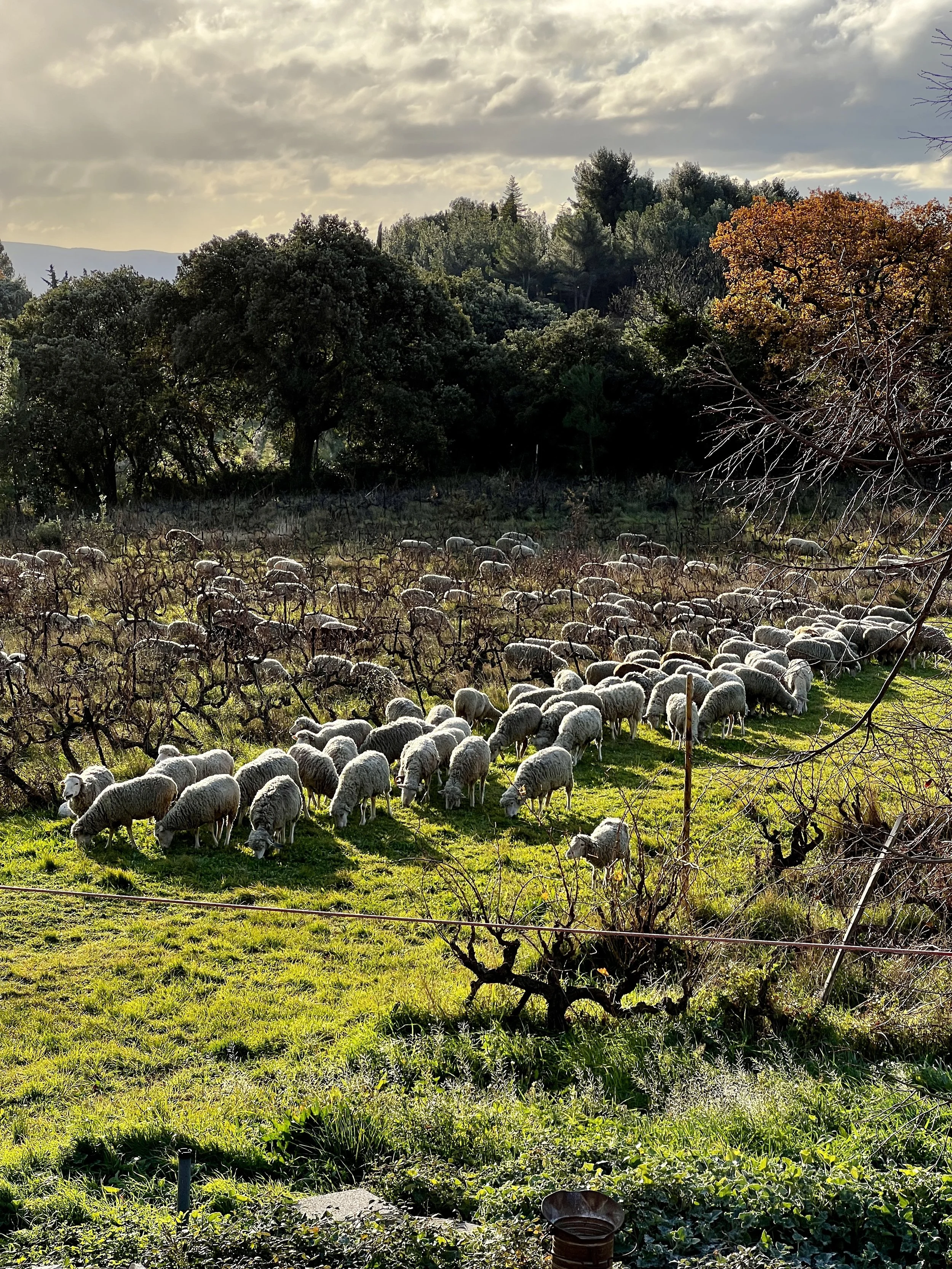
Clos de Trias sits in the far northwest corner of the Ventoux appellation — tucked into a part of the southern Rhône that few visitors find on their own. As the crow flies, we are just 8 kilometers (5 miles) from Gigondas and 23 kilometers (14 miles) from Châteauneuf-du-Pape, two of the most celebrated wine appellations in southern France, yet what you find in our bottles is entirely its own thing.
Our vines average nearly 50 years old, with some parcels significantly older. That age translates directly into what you taste — elegance, complexity and a depth that younger vines simply cannot deliver.
Some parcels are vinified separately, so that each one can express its own distinct personality in the glass. A north-facing parcel, for example, receives significantly fewer hours of sunlight than those facing south — and you can taste the difference immediately. Cooler, more restrained, with a completely different aromatic profile. Same domaine, different world.
Our approach to farming
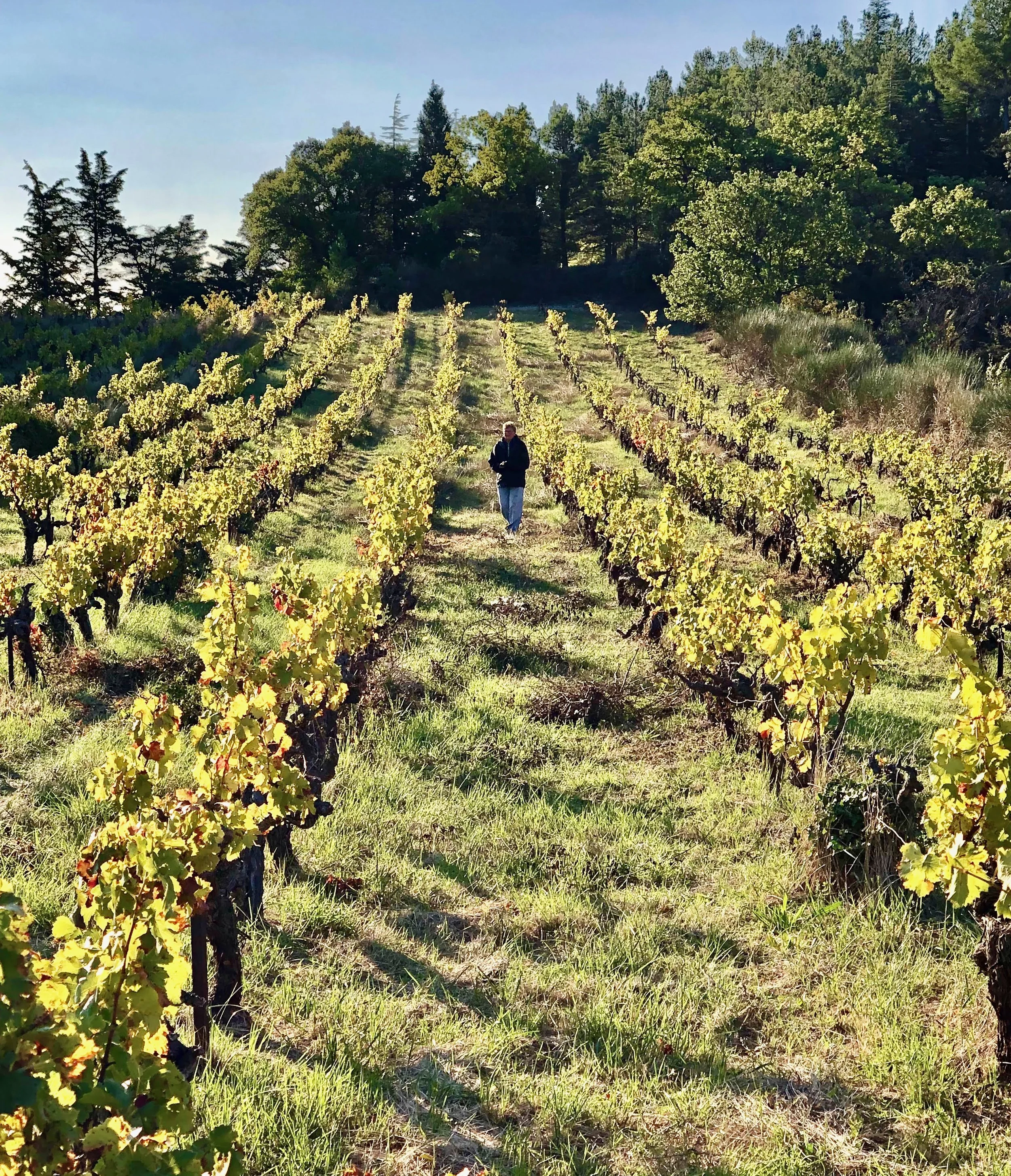
At Clos de Trias we have farmed organically since 2012, guided by biodynamic principles. We don't till, we don't irrigate, and we use no chemical pesticides or herbicides.
Instead we encourage natural cover crops to grow between the vines — wild thyme, marjoram, arugula, rosemary, allium, and dandelion — protecting the soil and fostering the kind of biodiversity that ultimately shows up in the glass.
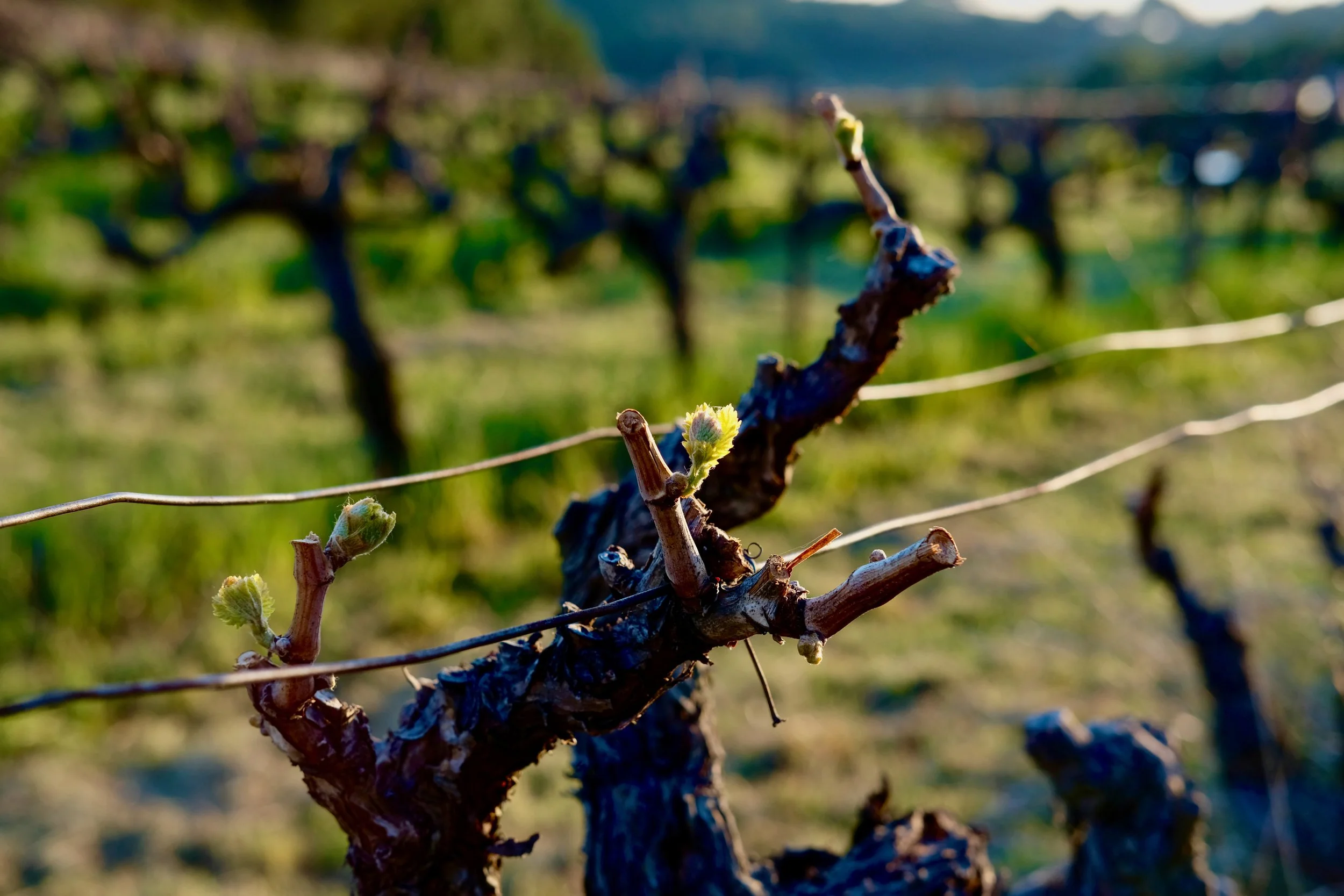
We prune late in the season, which delays bud break and reduces the risk of damage from an early spring frost. This technique also encourages veraison (final ripening) to happen after the heat of August, which is a big reason for high levels of sugars, and consequently, alcohol in southern France — techniques that directly benefit what ends up in your glass.
By the numbers:
Total size of the estate: 47 hectares (116 acres)
Area planted in grapes: 22 hectares (54 acres)
Area currently in production: 16 hectares (39 acres)
Average age of vines: 48 years
Altitude of the parcels: 350 to 500 meters (1,100 to 1,600 feet)
Bottles of red on average, per year: 35,000
Bottles of white, per year: 2,000
Number of olive trees: approx. 175
What People Are Saying
-
On the 2010 Vieilles Vignes: "This is frighteningly well made. It has personality, depth, precision and balance. You can sense the old vines both on the nose and the palate. Wonderfully drinkable, everything comes together marvellously."
—Cellartracker
-
On the white wine: "truly phenomenal... singing with pure, ripe apples and pears, accompanied by an attractive oxidative character, a true puissance, minerality and acidity." Remarkable.
—Gauntleys of Nottingham
-
On the 2016 Red Label: "The palate is soft, carried by a gentle sweetness, the tannins completely integrated... a superb pairing with a leg of lamb."
—La Passion du Vin